

BANKING
22 August 2026 BANKING
Jammu & Kashmir (J&K) Bank has entered into a Corporate Agency Agreement (CAA) with HDFC Life Insurance Company Ltd (HDFC Life) to offer a range of customer-centric insurance products.
Jammu & Kashmir (J&K) Bank has entered into a Corporate Agency Agreement (CAA) with HDFC Life Insurance Company Ltd (HDFC Life) to offer a range of customer-centric insurance products.
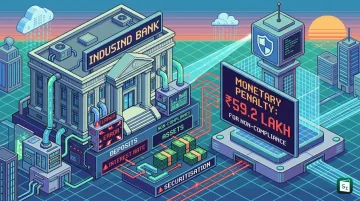
The RBI has imposed a monetary penalty of ₹59.2 lakh on IndusInd Bank Ltd for non-compliance with regulatory directions regarding ‘Interest Rate on Deposits’ and ‘Securitisation of Standard Assets’.

The Qatar-India Postal Remittance Service, utilizing PosTransfer powered by the UPI, has been operationalized in Doha, Qatar to facilitate faster, secure, and cost-effective cross-border remittance services between both countries.

Somanath Panicker, the former Chairman of the ISRO, has been appointed as a part-time, non-official director on the Central Board of the RBI) for 4 years, starting August 20, 2026. Anand Mahindra has also been re-appointed to the board for another 4 years.
It is to be noted that other non-official directors on the board include Venu Srinivasan (Chairman Emeritus of TVS Motor Company), Pankaj Ramanbhai Patel (Chairman of Zydus Lifesciences), and Dr Ravindra H Dholakia.

The International Financial Services Centres Authority (IFSCA) has granted an Investment Banking licence to Nexent Capital IFSC Pvt Ltd to operate from the Gujarat International Finance Tec-City (GIFT City) in Gandhinagar, Gujarat.

PMS Bazaar, an alternative investments platform, has partnered with NSDL Database Management Ltd (NDML) to facilitate the SEBI Accredited Investor certification process for eligible investors and entities.

Bengaluru-based Razorpay, a payments technology company, has launched an AI model named “Vulcan” to improve payment success rates and detect fraudulent activities. The model has been trained on a dataset of 4 billion transactions to identify patterns and mitigate risks.

According to the 101st Survey of Professional Forecasters (SPF) released by the RBI, the real Gross Domestic Product (GDP) growth of India is projected at 6.6% for FY27 (up from 6.5% estimated in the 100th SPF) and 7.0% for FY28.
The panellists placed the overall real GDP growth forecasts in the range of 6.0-7.2% for FY27 and 6.5-7.8% for FY28. The quarterly real GDP growth is projected at 6.8% (year-on-year) during Q1 FY27, and is expected to remain within the range of 6.4-7.0% over the subsequent four quarters.

IndusInd Bank and dining platform EazyDiner have jointly launched a lifetime-free co-branded credit card named 'EazyDiner IndusInd Bank Platinum RuPay Credit Card'.
The card offers dining discounts, entertainment benefits, and UPI payment functionality.

Muthoot FinCorp Ltd, a Non-Banking Financial Company (NBFC), has secured a perpetual Authorised Dealer Category-II (AD-II) foreign exchange (Forex) licence from the RBI. The licence enables the NBFC to offer a wider range of regulated forex services.

The RBI has extended the implementation timeline of its revised framework governing loan recovery and engagement of recovery agents from October 1, 2026 to January 1, 2027.
Under the revised directions, existing recovery agents who were not previously covered are granted a 1-year transition window to obtain certification from the Indian Institute of Banking and Finance (IIBF) or an affiliated institute.

Indel Remit, the foreign exchange division of Indel Money Ltd, has secured a perpetual Authorised Dealer-II (AD-II) licence from the RBI to offer trade remittance services.
Under RBI directions, the company is restricted from processing gifts, donations, and transactions exceeding ₹25 lakh.

Indian Bank approved nearly ₹500 crore in Micro, Small and Medium Enterprises (MSME) loans to 128 beneficiaries during a Credit Outreach Programme in New Delhi.
Credit proposals worth nearly ₹1,250 crore were mobilised during the event, which was held as part of the 120th Foundation Day Fortnight Celebrations of the bank. The programme also marked the launch of the Unified MSME Portal, a digital platform designed to provide seamless and integrated lending services for MSME customers.

The RBI has identified 17 Non-Banking Financial Companies (NBFCs) for inclusion in the Upper Layer (NBFC-UL) for FY27, based on their financial position as of March 31, 2026.
Tata Sons continues to be categorized under the upper-layer list. The new entities added to the list include Rural Electrification Corporation (REC) Ltd, Power Finance Corporation (PFC) Ltd, Indian Railway Finance Corporation (IRFC) Ltd, and Housing and Urban Development Corporation (HUDCO) Ltd.

Bajaj General Insurance has signed an MoU with Swiss Re Corporate Solutions, the commercial insurance arm of the Swiss Re Group based in Zurich, Switzerland, to explore opportunities in the commercial insurance segment in India.
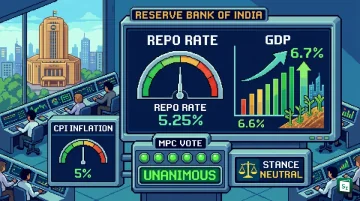
The 62nd and 3rd Bi-monthly Monetary Policy Committee (MPC) meeting of FY27 was held under the chairmanship of Sanjay Malhotra, Governor of the RBI.
The MPC voted unanimously to keep the policy repo rate under the Liquidity Adjustment Facility (LAF) unchanged at 5.25%, while maintaining a “Neutral” stance. The Standing Deposit Facility (SDF) rate remains at 5%, and both the Marginal Standing Facility (MSF) rate and the Bank Rate are maintained at 5.5%.
The RBI has revised the Gross Domestic Product (GDP) growth forecast of India for FY27 upward to 6.7% from its previous projection of 6.6%. The Consumer Price Index (CPI) inflation for FY27 is projected at 5%.

RBI has granted Authorised Dealer Category II (AD II) licences to Niyo Forex (via Kanji Forex Pvt Ltd) and GlobalPay (WSFx Global Pay Ltd).
While Niyo Forex received a perpetual licence, GlobalPay secured an expanded perpetual licence under the updated Foreign Exchange Management Act (FEMA) 2026. It is to be noted that these licences facilitate inward and outward trade remittances up to a limit of ₹25 lakh.

Standard Chartered Bank has received approval from the International Financial Services Centres Authority (IFSCA) to offer wealth management products and services through its branch at the Gujarat International Finance Tec-City (GIFT City) in Gandhinagar, Gujarat.
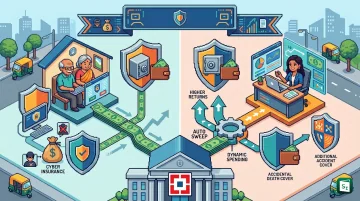
HDFC Bank has launched two new savings account variants, “Max for Seniors”, for senior citizens. and “Max for Her”, for women, to offer customized benefits.
The “Max for Seniors” variant offers cyber insurance coverage of up to ₹25,000 and a debit card-linked accidental death cover of up to ₹3.19 crore. The “Max for Her” variant provides an Auto Sweep facility for higher returns on surplus savings, along with a debit card-linked accidental death cover of up to ₹3.19 crore and an additional accident cover of up to ₹10 lakh.

The RBI has appointed Monisha Chakraborty as an Executive Director (ED), effective from August 3, 2026. In her new role, she will oversee the Foreign Exchange Department (FED) and the Financial Markets Regulation Department (FMRD).
Maha
185.3 P
P Pradeepa
187.3 V
V Vijay
176.8


Reviews collected across various platforms
"The memorising technique in the Scoreclever automatically stores the news in my mind and it saves time."
"It is very helpful platform to study current affairs. It has memory technique which saves lots of time during preparartion."
"Came across Editorial Vocabulary podcast video accidentally and really loved the idea. Its really useful for my preparation."
"Wonderful session. Thank you so much and really hats off to you for making current affairs and editorial an easy one."
"This is one the best app for Current Affairs. The content is cut and short whichever is required and is easy to remember with flashcards."
"Thx to daily quizzes. It played a big role in revisions. April 2024 - April 2025 I missed quizzes 3 or 4 days only. It's that interesting."
"Best app to learn current affairs in an effective way. I usually forgot current affairs easily and now I can easily remember everything."
"I studied current affairs only in Scoreclever and its really a time saver. Thanks Scoreclever team for all your efforts."
"Just wow. Haven't seen anyone explaining editorials like this. Crystal clear explanations with word by word. Thanks so much."
"This app is very useful to the persons who find difficult to go through the bunch of PDFs, and spending lots of time for revision."
"The memorising technique in the Scoreclever automatically stores the news in my mind and it saves time."
"It is very helpful platform to study current affairs. It has memory technique which saves lots of time during preparartion."
"Came across Editorial Vocabulary podcast video accidentally and really loved the idea. Its really useful for my preparation."
"Wonderful session. Thank you so much and really hats off to you for making current affairs and editorial an easy one."
"This is one the best app for Current Affairs. The content is cut and short whichever is required and is easy to remember with flashcards."
"Thx to daily quizzes. It played a big role in revisions. April 2024 - April 2025 I missed quizzes 3 or 4 days only. It's that interesting."
"Best app to learn current affairs in an effective way. I usually forgot current affairs easily and now I can easily remember everything."
"I studied current affairs only in Scoreclever and its really a time saver. Thanks Scoreclever team for all your efforts."
"Just wow. Haven't seen anyone explaining editorials like this. Crystal clear explanations with word by word. Thanks so much."
"This app is very useful to the persons who find difficult to go through the bunch of PDFs, and spending lots of time for revision."
"The memorising technique in the Scoreclever automatically stores the news in my mind and it saves time."
"It is very helpful platform to study current affairs. It has memory technique which saves lots of time during preparartion."
"Came across Editorial Vocabulary podcast video accidentally and really loved the idea. Its really useful for my preparation."
"Wonderful session. Thank you so much and really hats off to you for making current affairs and editorial an easy one."
"This is one the best app for Current Affairs. The content is cut and short whichever is required and is easy to remember with flashcards."
"Thx to daily quizzes. It played a big role in revisions. April 2024 - April 2025 I missed quizzes 3 or 4 days only. It's that interesting."
"Best app to learn current affairs in an effective way. I usually forgot current affairs easily and now I can easily remember everything."
"I studied current affairs only in Scoreclever and its really a time saver. Thanks Scoreclever team for all your efforts."
"Just wow. Haven't seen anyone explaining editorials like this. Crystal clear explanations with word by word. Thanks so much."
"This app is very useful to the persons who find difficult to go through the bunch of PDFs, and spending lots of time for revision."
Complete learning ecosystem to ace CA, English & GA
Revolutionary study technique for Current Affairs, English Vocabulary, and General Awareness. Learn once, remember forever.
Download on Play Store5x smaller, yet better than top sources. Daily Current Affairs and Editorial Vocabulary PDFs on Telegram.
Join on TelegramComprehensive, structured books with clean UI for long-term reading. Regularly updated with current events.
View DetailsIn-depth analysis of daily newspaper editorials with vocabulary breakdown, grammar insights, and key takeaways.
View DetailsCompete daily at 7 PM (Vocab) and 8 PM (Current Affairs). Win exciting rewards based on league rankings.
A dedicated website for Current Affairs preparation, featuring daily updates, and comprehensive resources.
About Us