
TVS Venu Group has announced plans to acquire up to a 9.9% stake in Jana Small Finance Bank (Jana SFB) through a combination of warrants and secondary share purchases. GWC Family Fund Investments will acquire a 5.64% stake via a primary issue of shares, and TVS Motor Company will purchase a 4.9% stake in the bank.

Viyona Fintech India Pvt Ltd has received certification from the National Payments Corporation of India (NPCI). The certification covers integrations for UPI Acquirer, UPI Issuer, Immediate Payment Service (IMPS), and Interoperable Mobile Banking (IBMB). This development aims to provide secure and seamless digital payment solutions for banks, fintech companies, and merchants.
ICICI Bank, in partnership with Visa, has launched India’s first USD-denominated debit card for Non-Resident Indian (NRI) customers.
The card was introduced through the International Financial Services Centre (IFSC) Banking Unit (IBU) located at Gujarat International Finance Tec-City (GIFT City) in Gandhinagar, Gujarat. The card is built on the Visa Infinite platform, which is the highest tier in the Visa network.
The Pension Fund Regulatory and Development Authority (PFRDA) has introduced a new post-retirement framework under the National Pension System (NPS) to provide subscribers with flexible periodic payout options. The regulator has launched Retirement Income Schemes (RIS) to facilitate flexible payouts during the decumulation phase while supporting corpus appreciation.
Currently, NPS subscribers can withdraw 60% of their corpus tax free at retirement, while the remaining 40% must be used to purchase an annuity. Additionally, PFRDA has extended the maximum age for maintaining NPS accounts from 75 years to 85 years for both government and non-government subscribers.
The SEBI has proposed a new regulatory framework named ‘Green Channel: Alternative Investment Funds (AIF) Rollout Upon Document Acknowledgement (GARUDA)’ to accelerate the launch and approval process of AIF schemes in India.
The GARUDA mechanism aims to streamline the processing of Placement Memorandums (PPMs) to facilitate faster fundraising. Under this, the waiting period for Non-Accredited Investor schemes is reduced from 30 days to 10 working days after filing the PPM. Additionally, Angel Funds and Accredited Investor-only schemes can commence fundraising almost immediately after filing their documents with the regulator.
AU Small Finance Bank (AU SFB) has launched a new portfolio of four credit cards named AU Ananta, AU Laksya, AU Tejas, and AU Prathama to cater to diverse income and lifestyle segments in Tier-1 and Tier-2 cities.
The credit card suite introduces an industry-first feature of providing complimentary airport lounge access for flight bookings made via the AU Rewardz platform.
The RBI has removed the requirement of prior approval for non bank entities to establish tie-up arrangements for outward remittance services through banks in India. This is part of an operating framework issued by the RBI to facilitate such services through Authorised Dealer (AD) Category I banks.
CTBC Bank Co Ltd has inaugurated a new branch at the GIFT City in Gandhinagar, Gujarat, becoming the first Taiwanese bank to establish a presence in the International Financial Services Centre (IFSC) of India.
It is to be noted that the bank has been operating in India for 30 years and has existing branches in New Delhi and Chennai.
The Department of Financial Services (DFS) under the Ministry of Finance (MoF) has launched the “Bharat Maritime Insurance Pool” (BMIP) in New Delhi. The BMIP is established with a total value of $1.5 billion, which includes a sovereign guarantee of $1.4 billion (₹12,980 crore).
The initiative aims to reduce the heavy reliance of Indian vessels on foreign International Group (IG) Protection and Indemnity (P&I) Clubs for third-party liability coverage.
The Delhi Metro Rail Corporation (DMRC) has partnered with Airtel Payments Bank to launch co-branded RuPay ‘On-The-Go’ National Common Mobility Cards (NCMC) to facilitate seamless digital payments and integrated metro travel across various transit systems in India.
The Indian Cyber Crime Coordination Centre (I4C) under the Ministry of Home Affairs (MHA) has signed an MoU with the Reserve Bank Innovation Hub (RBIH) to enhance the detection of mule accounts and to mitigate cyber financial frauds using AI based technologies. It is to be noted that the RBIH is a subsidiary of the RBI.
The RBI has cancelled the banking licence of the Mumbai (Maharashtra)-based Sarvodaya Co-operative Bank Ltd, effective from May 12, 2026. It is to be noted that the action was taken under Sections 22(4) and 56 of the Banking Regulation Act, 1949.
The RBI has signed an MoU with the European Central Bank (ECB) to enhance collaboration in the field of central banking. This agreement replaces the previous MoU signed in 2015. The updated MoU establishes a framework for regular policy dialogue and exchange of information between the two institutions.
The RBI has granted approval to Kotak Mahindra Bank Limited (KMBL) to acquire an equity stake of up to 9.99% in the paid-up share capital or voting rights of AU Small Finance Bank and Federal Bank Ltd. It is to be noted that the latter is one of the largest mid-sized private sector lenders in India based on market capitalisation (m-cap).
The Department of Financial Services (DFS) has approved the “Viability Plan 2.0” to institutionalize performance monitoring and strengthen governance reforms for Regional Rural Banks (RRBs). The plan is extended for a 3-year duration from FY26 to FY28, following the completion of the FY22–FY25 phase.
The framework of the plan includes 30 performance parameters categorized under 4 pillars: operational excellence, asset quality, profitability, and growth. The initiative aims to enhance financial stability and improve operational efficiency across all 28 RRBs.
The RBI has imposed a cumulative monetary penalty for regulatory non-compliance. YES Bank was fined ₹31.8 lakh for violating Know Your Customer (KYC) directions, while Hinduja Housing Finance was fined ₹1.8 lakh for failing to comply with other RBI directions.
The SEBI has constituted a specialized task force named ‘Cyber suraksha.ai’ to assess cybersecurity risks associated with advanced AI tools and enhance cyber resilience.
The task force consists of representatives from Market Infrastructure Institutions (MIIs), Qualified Registrar and Transfer Agents (QRTAs), and Regulated Entities (REs), along with other relevant stakeholders.
Jio Payments Bank Ltd (JPBL) has partnered with the Ezeepay to serve as a Business Correspondent (BC). The collaboration aims to strengthen last-mile digital banking in rural and semi-urban India by providing access to basic banking facilities through local merchant outlets.
The National Stock Exchange of India (NSE) has launched the Electronic Gold Receipts (EGR) segment after receiving regulatory approval from the SEBI.
The initiative aims to create a transparent and efficient gold trading ecosystem by enhancing price discovery and broadening market participation. It also aims to strengthen investor confidence through a modernized and regulated trading framework.
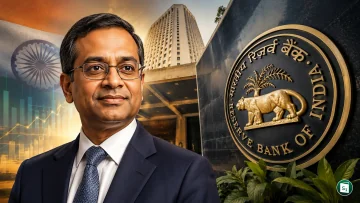
The Appointments Committee of the Cabinet (ACC) has approved the appointment of Rohit Jain as the Deputy Governor of the RBI for a 3-year term, effective from May 3, 2026. He will succeed T Rabi Sankar.