
DEFENCE
25 June 2026 DEFENCE
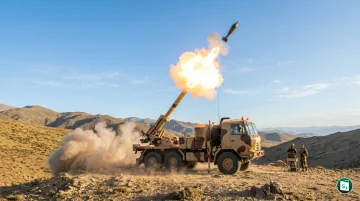
India has successfully tested the indigenous 120-millimeter (mm) vehicle-mounted mortar system named "Garudastra", developed by Nibe Ltd for the Indian Army.
India has successfully tested the indigenous 120-millimeter (mm) vehicle-mounted mortar system named "Garudastra", developed by Nibe Ltd for the Indian Army.

The Ministry of Defence has granted in-principle approval to establish a National Military Drone Technology Hub at the IIT Kanpur in Uttar Pradesh.
The project, valued at ₹500 crore, aims to strengthen India's capabilities in advanced unmanned systems.

The Indian Army has procured 106 jet-powered Peacekeeper (Agniveg) drones from the defence manufacturer SMPP Ltd. The consignment includes 100 operational drones and 6 training drones.
These drones were developed in partnership with KB Indela, Belarus, and have been partially localized within India. The Peacekeeper drone has an operational range of 180 km. An upgraded variant of the drone, capable of reaching speeds of 750 kmph, has been proposed.

Kalyani Strategic Systems Ltd (KSSL), the defence arm of Bharat Forge Ltd (BFL), in partnership with the South Africa-based Paramount Group, has unveiled the 'Simha 4x4 Light Armoured Multi-Purpose Vehicle (LAMPV)'.
The vehicle, featuring an ab initio modular design, was unveiled at the Eurosatory 2026 event held in Paris, France.
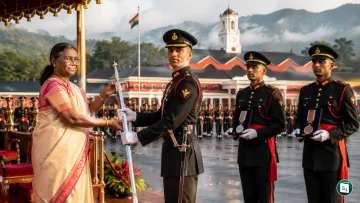
President Droupadi Murmu presided over the Passing Out Parade of the 158th Regular Course of the Indian Military Academy in Dehradun, Uttarakhand.
Lieutenant Vishal Kumar was awarded the Sword of Honour and the President’s Gold Medal for securing the first position in the overall Order of Merit and emerging as the best all-round officer cadet. Academy Under Officer Prince Raj received the Silver Medal, and Senior Under Officer Tejas Bhatt was awarded the Bronze Medal.
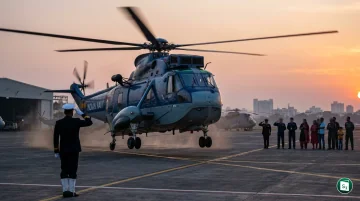
The Indian Navy (IN) has decommissioned its fleet of 'Sea King Mk42B' helicopters, also known as the ‘Flying Frigates’, after 36 years of service.
The fleet, operated by the Indian Naval Air Squadron (INAS 330), concluded its service with a final ceremonial flight from INS Shikra, the base of the Western Naval Command (WNC) in Mumbai.

Prime Minister Narendra Modi has commissioned three indigenously built naval ships INS Dunagiri, INS Sanshodhak, and INS Agray, at the Syama Prasad Mookerjee Port Trust in Kolkata.
These frontline warships were designed by the Warship Design Bureau of the Indian Navy and manufactured by the Kolkata-based Garden Reach Shipbuilders & Engineers Ltd (GRSE), with over 75% indigenous content.
INS Dunagiri is a Project 17A stealth guided-missile frigate equipped with BrahMos supersonic cruise missiles and Medium Range Surface-to-Air Missile (MRSAM) systems. INS Sanshodhak is a Sandhayak-class Large Survey Vessel (SVL). INS Agray is an Arnala-class anti-submarine shallow water craft.
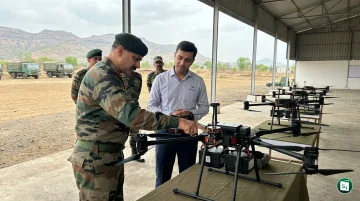
Drogo Aerospace Pvt Ltd, formerly known as Drogo Drones, has delivered the first batch of 41 'JK 250e' electric drones to the Southern Command of the Indian Army in Nashik, Maharashtra. This delivery is part of a contract worth ₹72 crore for the procurement of 217 drones.

India and Thailand have held the 10th Defence Dialogue in Bangkok, Thailand, to strengthen bilateral security cooperation.
During the dialogue, both nations agreed to deepen collaboration in manufacturing, research, innovation, and capability development.
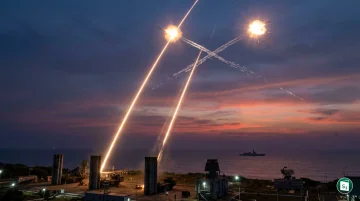
The DRDO has conducted three consecutive flight tests of its integrated multi-layered Ballistic Missile Defence (BMD) system. These trials, executed from the Integrated Test Range (ITR) in Chandipur, Odisha, demonstrated the system’s capability to intercept long-range (5,000 km) and medium-range (2,000 km) missiles using two advanced interceptor missiles.
Additionally, the maiden flight test of the indigenous Naval Anti-Ship Missile–Medium Range (NASM-MR) was also successfully conducted.
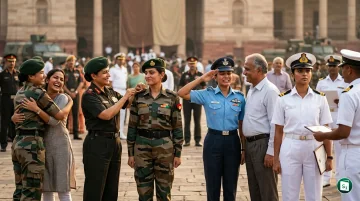
The Ministry of Defence has commissioned the first batch of 17 women cadets trained at the National Defence Academy (NDA) into the Indian Armed Forces, marking a historic milestone in gender inclusion.
The Indian Army commissioned 9 women officers at the Indian Military Academy (IMA) in Dehradun, Uttarakhand. The Indian Air Force commissioned 5 women officers at the Air Force Academy (AFA) in Dundigal, Hyderabad, and the Indian Navy commissioned 3 women officers at the Indian Naval Academy (INA) in Ezhimala, Kerala.

According to the Ministry of Defence, India’s annual defence production has reached an all-time high of ₹1.78 lakh crore in the FY26. This marks a 15.6% annual growth from the ₹1.54 lakh crore recorded in FY25.
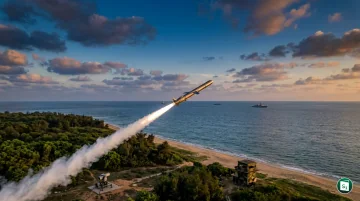
The DRDO has successfully conducted the flight-test of the indigenous Long Range Land Attack Cruise Missile (LRLACM) from Dr APJ Abdul Kalam Island, off the coast of Odisha.
All sub-systems of the missile were developed by various DRDO laboratories and Indian industry partners, with the Aeronautical Development Establishment (ADE) in Bengaluru serving as the nodal laboratory for the project.
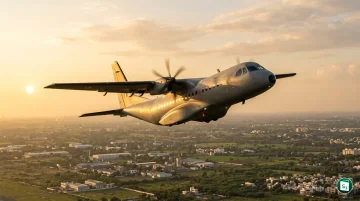
Tata Advanced Systems Ltd (TASL) and Airbus SE have successfully completed the first test flight of India’s first domestically manufactured Airbus C295 military transport aircraft from the Final Assembly Line in Vadodara, Gujarat.
This marks India’s first large-scale private-sector military aircraft programme, executed under a Ministry of Defence contract worth ₹21,935 crore. The contract involves the supply of 56 C295 aircraft to the Indian Air Force, with deliveries scheduled between 2026 and 2031.
This initiative aims to modernise the transport fleet of the IAF by replacing the ageing Avro-748 fleet and phasing out the Antonov An-32 aircraft.

The Headquarters Directorate General of the National Cadet Corps (NCC) has approved the establishment of independent State Directorates in Andhra Pradesh and Jharkhand. This expansion increases the total number of NCC State Directorates in India from 17 to 19.
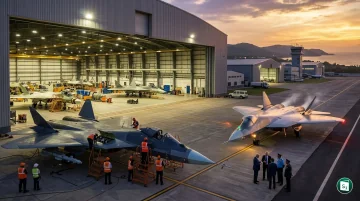
Russian President Vladimir Putin has offered India the advanced Sukhoi Su-57, a fifth-generation stealth aircraft.
He also proposed joint production in India, including full technology transfer and the establishment of manufacturing facilities, during the St. Petersburg International Economic Forum (SPIEF) held in St. Petersburg, Russia.
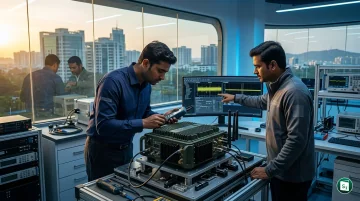
The Ministry of Defence has signed a contract with the Bengaluru-based Accord Software and Systems Pvt Ltd (ASSPL) for the procurement of 20 Enhanced Capability Global Navigation Satellite System (ECGNSS) Jammers for the Indian Navy.
The contract is worth ₹449 crore and falls under the ‘Buy (Indian-Indigenously Designed, Developed and Manufactured (IDDM))’ category, which mandates at least 75% indigenous content.

India has issued a Letter of Request (LoR) to France for a government-to-government (G2G) deal worth ₹3.25 lakh crore to procure 114 Rafale fighter jets for the Indian Air Force (IAF).
Under this agreement, 94 of these aircraft will be manufactured in India by Dassault Aviation in collaboration with an Indian partner. The first Rafale-M jets are expected to be delivered by 2028.

Major Prabhat Mishra of the Indian Army (IA), belonging to the 22 Kumaon Regiment, has been honoured with the Birrer-Brookes Award for Outstanding Master of Military Arts and Science (MMAS) Thesis and the General Douglas MacArthur Military Leadership Writing Award.
He has also received the Golden Pen Award for scholarly excellence. It is to be noted that he is the first Indian officer to win both the awards simultaneously.

Union Minister Rajnath Singh has approved the establishment of a 250 MW Solar Power Project at the Sitapur Ex-Cantonment area in Uttar Pradesh. This is the first large-scale green energy installation developed on vacant defence land.
The project will feature an integrated Battery Energy Storage System (BESS) to store surplus energy and ensure a stable power supply. NTPC Ltd will implement the project through a competitive bidding process.
Maha
185.3 P
P Pradeepa
187.3 V
V Vijay
176.8


Reviews collected across various platforms
"The memorising technique in the Scoreclever automatically stores the news in my mind and it saves time."
"It is very helpful platform to study current affairs. It has memory technique which saves lots of time during preparartion."
"Came across Editorial Vocabulary podcast video accidentally and really loved the idea. Its really useful for my preparation."
"Wonderful session. Thank you so much and really hats off to you for making current affairs and editorial an easy one."
"This is one the best app for Current Affairs. The content is cut and short whichever is required and is easy to remember with flashcards."
"Thx to daily quizzes. It played a big role in revisions. April 2024 - April 2025 I missed quizzes 3 or 4 days only. It's that interesting."
"Best app to learn current affairs in an effective way. I usually forgot current affairs easily and now I can easily remember everything."
"I studied current affairs only in Scoreclever and its really a time saver. Thanks Scoreclever team for all your efforts."
"Just wow. Haven't seen anyone explaining editorials like this. Crystal clear explanations with word by word. Thanks so much."
"This app is very useful to the persons who find difficult to go through the bunch of PDFs, and spending lots of time for revision."
"The memorising technique in the Scoreclever automatically stores the news in my mind and it saves time."
"It is very helpful platform to study current affairs. It has memory technique which saves lots of time during preparartion."
"Came across Editorial Vocabulary podcast video accidentally and really loved the idea. Its really useful for my preparation."
"Wonderful session. Thank you so much and really hats off to you for making current affairs and editorial an easy one."
"This is one the best app for Current Affairs. The content is cut and short whichever is required and is easy to remember with flashcards."
"Thx to daily quizzes. It played a big role in revisions. April 2024 - April 2025 I missed quizzes 3 or 4 days only. It's that interesting."
"Best app to learn current affairs in an effective way. I usually forgot current affairs easily and now I can easily remember everything."
"I studied current affairs only in Scoreclever and its really a time saver. Thanks Scoreclever team for all your efforts."
"Just wow. Haven't seen anyone explaining editorials like this. Crystal clear explanations with word by word. Thanks so much."
"This app is very useful to the persons who find difficult to go through the bunch of PDFs, and spending lots of time for revision."
"The memorising technique in the Scoreclever automatically stores the news in my mind and it saves time."
"It is very helpful platform to study current affairs. It has memory technique which saves lots of time during preparartion."
"Came across Editorial Vocabulary podcast video accidentally and really loved the idea. Its really useful for my preparation."
"Wonderful session. Thank you so much and really hats off to you for making current affairs and editorial an easy one."
"This is one the best app for Current Affairs. The content is cut and short whichever is required and is easy to remember with flashcards."
"Thx to daily quizzes. It played a big role in revisions. April 2024 - April 2025 I missed quizzes 3 or 4 days only. It's that interesting."
"Best app to learn current affairs in an effective way. I usually forgot current affairs easily and now I can easily remember everything."
"I studied current affairs only in Scoreclever and its really a time saver. Thanks Scoreclever team for all your efforts."
"Just wow. Haven't seen anyone explaining editorials like this. Crystal clear explanations with word by word. Thanks so much."
"This app is very useful to the persons who find difficult to go through the bunch of PDFs, and spending lots of time for revision."
Complete learning ecosystem to ace CA, English & GA
Revolutionary study technique for Current Affairs, English Vocabulary, and General Awareness. Learn once, remember forever.
Download on Play Store5x smaller, yet better than top sources. Daily Current Affairs and Editorial Vocabulary PDFs on Telegram.
Join on TelegramComprehensive, structured books with clean UI for long-term reading. Regularly updated with current events.
View DetailsIn-depth analysis of daily newspaper editorials with vocabulary breakdown, grammar insights, and key takeaways.
View DetailsCompete daily at 7 PM (Vocab) and 8 PM (Current Affairs). Win exciting rewards based on league rankings.
A dedicated website for Current Affairs preparation, featuring daily updates, and comprehensive resources.
About Us