
APPOINTMENTS
24 September 2026 APPOINTMENTS
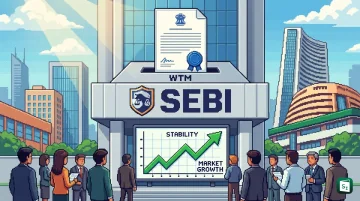
The Appointments Committee of the Cabinet has approved the reappointment of Kamlesh Chandra Varshney as a Whole-Time Member (WTM) of the Securities and Exchange Board of India (SEBI).
The Appointments Committee of the Cabinet has approved the reappointment of Kamlesh Chandra Varshney as a Whole-Time Member (WTM) of the Securities and Exchange Board of India (SEBI).

The SEBI has signed an MoU with the European Securities and Markets Authority (ESMA) to strengthen bilateral cooperation and the exchange of information.
The collaboration specifically focuses on Central Counterparties (CCPs) regulated and supervised by SEBI.

The National Commodity & Derivatives Exchange Limited (NCDEX) has launched “RAINCHNNAI”, a rainfall-based weather derivatives contract in Chennai to help market participants hedge risks associated with the Northeast (NE) monsoon.
The contract uses a cash-settled futures model to track rainfall deviations in Chennai between September and December. It is to be noted that the NE monsoon, also known as the retreating monsoon, contributes nearly 70% of the annual rainfall in Chennai.

The SEBI has granted a Category-I merchant banking licence to Zerodha Corporate Advisors, a subsidiary of Zerodha, to enter the investment banking sector focusing on capital market services.
As per the new regulations by SEBI, Category-I merchant bankers are authorised to manage main-board public issues and perform underwriting activities. It is to be noted that the minimum net worth requirement for Category-I is increased to ₹50 crore from ₹5 crore, and the underwriting capacity for these entities is capped at 20 times their liquid net worth.
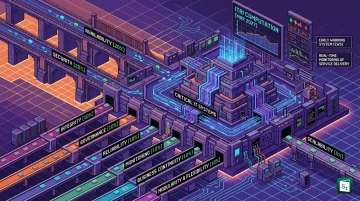
The Securities and Exchange Board of India (SEBI) has introduced the ‘IT Resilience Index’ (ITRI) Framework for Market Infrastructure Institutions (MIIs) to evaluate the robustness and operational resilience of their critical Information Technology (IT) systems.
The ITRI will assess the technology systems of MIIs using nine parameters.
Within the framework, availability and security are assigned the highest weightage of 20% each.
Integrity, governance, reliability and monitoring, business continuity, and modularity and flexibility each carry a 10% weightage, while scalability is allocated 5%.
The Early Warning System (EWS) and Real Time Monitoring of Service Delivery must be operationalised by February 2027, with the inaugural ITRI computation covering the half-year ending March 2027.

The SEBI has launched two new web portals, “SEBI Incident Reporting” and “Cyber Suraksha”, to strengthen cybersecurity and information sharing in the securities market ecosystem.
The “SEBI Incident Reporting” portal is an updated version of the existing system designed for structured, timely, and actionable reporting of cyber-incidents.
The “Cyber Suraksha” portal will serve as a centralized hub for sharing cybersecurity information, including vulnerability warnings, policy measures, and incident insights.
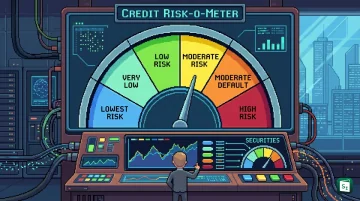
The SEBI has released a consultation paper proposing a mandatory, colour-coded “Credit Risk-o-Meter” for debt securities to help investors assess and compare credit risks. This mechanism is based on the existing “Risk-o-Meter” framework for Mutual Funds (MFs), which classifies investment risk into six levels from “Low” to “Very High”.
The new meter will map the conventional credit rating scale (AAA to D) into six visual categories: Lowest credit risk, Very low credit risk, Low credit risk, Moderate credit risk, Moderate risk of default, and High to very high risk of default.

Bombay Stock Exchange (BSE) has signed an MoU with the PHD Chamber of Commerce and Industry (PHDCCI) to facilitate equity financing for Micro, Small and Medium Enterprises (MSMEs) through capital markets.

PMS Bazaar, an alternative investments platform, has partnered with NSDL Database Management Ltd (NDML) to facilitate the SEBI Accredited Investor certification process for eligible investors and entities.
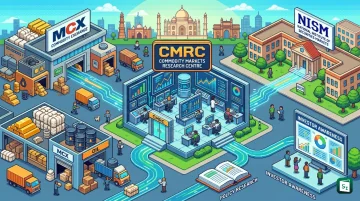
The Multi Commodity Exchange of India Ltd (MCX) has signed an MoU with the National Institute of Securities Markets (NISM) to launch the Commodity Markets Research Centre (CMRC) to promote academic excellence, policy research, and investor awareness in the commodities sector.

The SEBI has extended the deadline for Regulated Entities (RE) to complete the Accessibility Audit of digital platforms and the remediation of audit findings under its Digital Accessibility framework to October 31, 2026.
SEBI has also launched the GARUDA framework to simplify and accelerate the filing process for Alternative Investment Fund (AIF) schemes.

The National Commodity and Derivatives Exchange Limited (NCDEX) has launched a mutual fund (MF) transaction platform named 'NCDEX Nidhi'.
The platform aims to increase MF penetration in rural and semi-rural India by leveraging its network of 800 Farmer Producer Organisations (FPOs) and certified local MF distributors. It has initially onboarded 6 Asset Management Companies (AMCs).

The National Stock Exchange (NSE) has announced the launch of 'Indian Natural Gas Futures', the first exchange-traded energy derivative of India.
The contract is linked to a domestic benchmark and will be traded under the symbol 'NATGASIND'. Following the approval from the SEBI, trading is scheduled to commence on 27 July 2026.

SEBI has granted approval to the Mumbai-based Carnelian Asset Management & Advisors Pvt Ltd to commence its Mutual Fund (MF) business.
This authorization allows the firm to provide a wide range of active and passive equity, debt, and hybrid mutual fund schemes to retail investors.

The SEBI has constituted an Expert Working Group (EWG) to review the regulatory framework for debenture trustees under the SEBI (Debenture Trustees) Regulations, 1993.
The group is chaired by Ananta Barua, a former Whole-Time Member of SEBI, and co-chaired by Rajnish Kumar, the former Chairman of the SBI.

Zerodha Fund House, India's first passive-only, direct-only Asset Management Company (AMC), has launched the country's first lifecycle (target-date) mutual funds. The new funds include the 'Zerodha Life Cycle Fund 2036' (10-year maturity) and the 'Zerodha Life Cycle Fund 2041' (15-year maturity).
These funds are classified as equity funds for taxation purposes, offering long-term capital gains (LTCG) benefits. It is to be noted that these funds have no lock-in period and require a minimum investment of ₹100.

SEBI has revised the trading framework for Exchange Traded Funds (ETFs) by introducing dynamic price bands, effective from September 2026.
For equity and debt ETFs (excluding overnight and liquid ETFs), the fixed 20% price band based on Net Asset Value (NAV) is replaced by a dynamic price band starting at 10%, which can be expanded up to 20% after a cooling-off period. If prices hit the upper threshold, the band expands by 5% increments.
For commodity ETFs tracking gold and silver, the framework prescribes dynamic price bands with an initial limit of ±6%, which can be expanded in stages of 3% after a cooling-off period.

Nuvama Wealth Management Ltd has received final approval from the SEBI to commence mutual fund (MF) operations. The company will conduct these operations through its asset management arm, Nuvama Asset Management Ltd.

The RBI has issued the “Third Amendment Directions, 2026” to govern bank lending to Real Estate Investment Trusts (REITs) and Infrastructure Investment Trusts (InvITs), while strengthening risk and exposure norms.
Banks are permitted to extend credit only to those REITs and InvITs that are registered with the SEBI and listed on recognized Stock Exchanges. Lending to REITs is restricted to listed trusts where at least 80% of assets consist of cash-generating properties that have been operational for more than 1 year.
Banks may lend to listed InvITs only if at least 80% of their assets are invested in completed and revenue-generating infrastructure projects that have demonstrated positive cash flows for a period exceeding 1 year.

The National Institute of Securities Markets (NISM) has partnered with Galgotias University in Uttar Pradesh to enhance professional learning in sectors like securities markets, financial services, derivatives, fintech, and risk management.
Maha
185.3 P
P Pradeepa
187.3 V
V Vijay
176.8


Reviews collected across various platforms
"The memorising technique in the Scoreclever automatically stores the news in my mind and it saves time."
"It is very helpful platform to study current affairs. It has memory technique which saves lots of time during preparartion."
"Came across Editorial Vocabulary podcast video accidentally and really loved the idea. Its really useful for my preparation."
"Wonderful session. Thank you so much and really hats off to you for making current affairs and editorial an easy one."
"This is one the best app for Current Affairs. The content is cut and short whichever is required and is easy to remember with flashcards."
"Thx to daily quizzes. It played a big role in revisions. April 2024 - April 2025 I missed quizzes 3 or 4 days only. It's that interesting."
"Best app to learn current affairs in an effective way. I usually forgot current affairs easily and now I can easily remember everything."
"I studied current affairs only in Scoreclever and its really a time saver. Thanks Scoreclever team for all your efforts."
"Just wow. Haven't seen anyone explaining editorials like this. Crystal clear explanations with word by word. Thanks so much."
"This app is very useful to the persons who find difficult to go through the bunch of PDFs, and spending lots of time for revision."
"The memorising technique in the Scoreclever automatically stores the news in my mind and it saves time."
"It is very helpful platform to study current affairs. It has memory technique which saves lots of time during preparartion."
"Came across Editorial Vocabulary podcast video accidentally and really loved the idea. Its really useful for my preparation."
"Wonderful session. Thank you so much and really hats off to you for making current affairs and editorial an easy one."
"This is one the best app for Current Affairs. The content is cut and short whichever is required and is easy to remember with flashcards."
"Thx to daily quizzes. It played a big role in revisions. April 2024 - April 2025 I missed quizzes 3 or 4 days only. It's that interesting."
"Best app to learn current affairs in an effective way. I usually forgot current affairs easily and now I can easily remember everything."
"I studied current affairs only in Scoreclever and its really a time saver. Thanks Scoreclever team for all your efforts."
"Just wow. Haven't seen anyone explaining editorials like this. Crystal clear explanations with word by word. Thanks so much."
"This app is very useful to the persons who find difficult to go through the bunch of PDFs, and spending lots of time for revision."
"The memorising technique in the Scoreclever automatically stores the news in my mind and it saves time."
"It is very helpful platform to study current affairs. It has memory technique which saves lots of time during preparartion."
"Came across Editorial Vocabulary podcast video accidentally and really loved the idea. Its really useful for my preparation."
"Wonderful session. Thank you so much and really hats off to you for making current affairs and editorial an easy one."
"This is one the best app for Current Affairs. The content is cut and short whichever is required and is easy to remember with flashcards."
"Thx to daily quizzes. It played a big role in revisions. April 2024 - April 2025 I missed quizzes 3 or 4 days only. It's that interesting."
"Best app to learn current affairs in an effective way. I usually forgot current affairs easily and now I can easily remember everything."
"I studied current affairs only in Scoreclever and its really a time saver. Thanks Scoreclever team for all your efforts."
"Just wow. Haven't seen anyone explaining editorials like this. Crystal clear explanations with word by word. Thanks so much."
"This app is very useful to the persons who find difficult to go through the bunch of PDFs, and spending lots of time for revision."
Complete learning ecosystem to ace CA, English & GA
Revolutionary study technique for Current Affairs, English Vocabulary, and General Awareness. Learn once, remember forever.
Download on Play Store5x smaller, yet better than top sources. Daily Current Affairs and Editorial Vocabulary PDFs on Telegram.
Join on TelegramComprehensive, structured books with clean UI for long-term reading. Regularly updated with current events.
View DetailsIn-depth analysis of daily newspaper editorials with vocabulary breakdown, grammar insights, and key takeaways.
View DetailsCompete daily at 7 PM (Vocab) and 8 PM (Current Affairs). Win exciting rewards based on league rankings.
A dedicated website for Current Affairs preparation, featuring daily updates, and comprehensive resources.
About Us