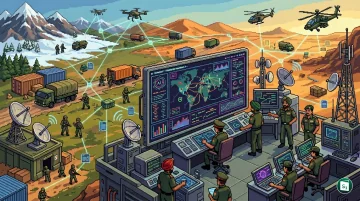
The Indian Army (IA) has launched ‘Q-FORCE’, an integrated digital application designed to streamline logistics and sustainment management by integrating multiple logistics and inventory platforms across diverse operational terrains.
Additionally, the IA has introduced ‘Kautilya’, an AI-powered command intelligence platform.
Union Minister of State (Independent Charge) Dr Jitendra Singh has launched the Centralized Public Grievance Redress and Monitoring System (CPGRAMS) AI-enabled voice chatbot named “Samadhan Didi” at Kartavya Bhawan in New Delhi.
The chatbot is developed by the Department of Administrative Reforms and Public Grievances (DARPG) in collaboration with Bhasini. It allows citizens to lodge grievances by speaking in their native language.
Jumpp, operated by the Finvasia Group, has received Corporate Agency and Insurance Self Network Platform (ISNP) licences from the Insurance Regulatory and Development Authority of India (IRDAI).
These licences enable Jumpp to distribute insurance products digitally through its AI-powered platform. The platform has also partnered with YES Bank to provide banking and Bharat Bill Payment System (BBPS) services.
Union Minister Rajnath Singh visited Vietnam to operationalise the Enhanced Comprehensive Strategic Partnership (ECSP). During his visit, he held ministerial-level discussions with the Deputy Prime Minister of Vietnam, General Phan Van Giang, and met with the President of Vietnam, To Lam.
He announced that India is committed to establishing an AI laboratory at the Telecommunications University in Nha Trang. Additionally, he visited the Ho Chi Minh Mausoleum in Hanoi on the 136th birth anniversary of the leader.
PM Narendra Modi has visited Sweden at the invitation of the PM of Sweden, Ulf Kristersson. The visit transitioned the bilateral relations into a formal “Strategic Partnership” and adopted the “Joint Action Plan (2026-2030)”.
Building on a record $7.75 billion bilateral trade volume achieved in 2025, both nations agreed to double their trade over the next 5 years. During his address to the European Round Table for Industry (ERT) in Gothenburg, PM Modi highlighted that India has followed a “12-year trajectory of reforms, performance, and transformation”.
The “India-Sweden Small and Medium Enterprises (SME) and Start-up Platform” was initiated. The leaders also endorsed the “India-Sweden Technology and Artificial Intelligence Corridor (SITAC)”. Additionally, a virtual “India-Sweden Joint Science and Technology Centre (ISJSTC)” was launched to strengthen bilateral scientific cooperation.
In the field of space exploration, Sweden announced its participation in the Venus Orbiter Mission (“Shukrayaan”) of India, with the Swedish Institute of Space Physics supplying the advanced Venusian Neutrals Analyzer to fly aboard the spacecraft of the ISRO. Furthermore, both nations rolled out the “Tagore-Sweden” Lecture Series to deepen academic connections.
The Ministry of Textiles has launched the “Bharat Tex 2026 Event Application” to facilitate AI-driven networking and business matchmaking for the upcoming “Bharat Tex 2026” exhibition. The exhibition is scheduled to be held at Bharat Mandapam in New Delhi.
The application features an AI-powered smart assistant designed to provide 24x7 conversational support for event schedules, venue details, directions, and other related queries.
Scientists at the Indian Council of Agricultural Research (ICAR)-Central Rice Research Institute (CRRI) in Cuttack, Odisha, led by Kutubuddin Ali Molla, have developed and validated a platform named “Plant-OpenCRISPR1” (POC1).
This represents the first AI-designed genome-editing platform in the world for plants, developed utilizing rice as a model crop. The POC1 platform facilitates advanced gene knockout, base editing, and prime editing in rice crops using AI-designed enzymes, surpassing conventional Clustered Regularly Interspaced Short Palindromic Repeats (CRISPR) technologies.
It is to be noted that the research findings have been accepted for publication in the international journal “New Phytologist”.
The Central Bureau of Investigation (CBI), under the Department of Personnel and Training (DoPT)), has launched an AI-based helpbot named ‘ABHAY’ (AI-Based Helpbot for Authentication of Your Notice).
The initiative aims to authenticate official CBI notices and safeguard citizens against cyber fraud and digital arrest scams.
Google and Blackstone, the world’s largest alternative asset manager, have announced a joint venture (JV) to establish an AI cloud infrastructure company. Blackstone has committed an initial equity investment of $5 billion for the venture. Benjamin Sloss has been appointed as the CEO of the newly formed company.
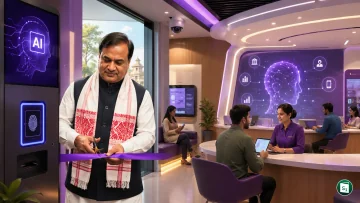
Assam CM Himanta Biswa Sarma inaugurated India’s first AI-powered ‘phygital’ banking branch of Slice Small Finance Bank (Slice SFB) in Guwahati, Assam. The ‘phygital’ model integrates physical banking infrastructure with digital technologies to provide seamless and efficient financial services.
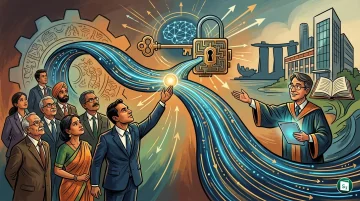
The Confederation of Indian Industry (CII) has signed an MoU with the National University of Singapore Institute of Systems Science (NUS-ISS) to strengthen AI governance and digital leadership capabilities among Indian enterprises.
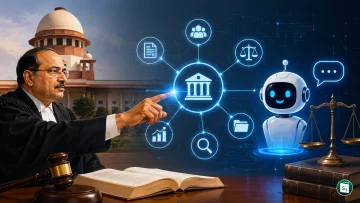
CJI Surya Kant has launched the 'One Case One Data' initiative to improve data integration and transparency across all levels of the judiciary. He also introduced 'Su Sahay', an AI powered judicial assistance chatbot designed to enhance efficiency in the management of court cases.
The Indian Cyber Crime Coordination Centre (I4C) under the Ministry of Home Affairs (MHA) has signed an MoU with the Reserve Bank Innovation Hub (RBIH) to enhance the detection of mule accounts and to mitigate cyber financial frauds using AI based technologies. It is to be noted that the RBIH is a subsidiary of the RBI.
IndiaAI Mission has signed an MoU with the Bengaluru-based Karya, a Nonprofit Organization (NPO), to enhance accessibility within the AI economy. The partnership focuses on data, technology, and capacity building, specifically to strengthen the infrastructure of AIKosh, the national AI data platform of India for research and development (R&D). Both organizations also aim to develop model evaluation frameworks and establish standards for dataset quality, validation, and interoperability.
The Ministry of AYUSH has signed an MoU with the Digital India BHASHINI Division to enhance multilingual digital services. The collaboration aims to integrate AI-powered multilingual access across various digital platforms and services of AYUSH. Under the partnership, BHASHINI technologies will be utilized to provide services related to AYUSH in all 22 Scheduled Indian languages.
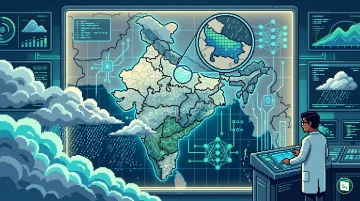
Union Minister Jitendra Singh has unveiled two AI-enabled weather forecasting models to provide hyperlocal monsoon and rainfall data. The models were collaboratively developed by the India Meteorological Department (IMD), the Indian Institute of Tropical Meteorology (IITM), Pune, and the National Centre for Medium Range Weather Forecasting (NCMRWF).
The “AI-Enabled Monsoon Advance Forecasting System” provides subdistrict or block-level forecasting for the first time, covering 3,196 blocks across 15 states and 1 Union Territory (UT) in the rainfed monsoon core zone of India. It is to be noted that the system predicts monsoon progression up to 4 weeks in advance with an error margin of 4 days.
The “High Spatial Resolution Rainfall Forecast” is a pilot project in Uttar Pradesh that uses the “Mithuna” weather model to downscale 12.5-km grids to a 1-km resolution. It generates specific rainfall forecasts for up to 10 days in advance.
OP Jindal Global University (JGU), located in Sonipat, Haryana, has become the first Institute of Eminence (IoE) in India to receive accreditation from the Data Science Council of America (DASCA). The accreditation was granted under the “World Data Sciences & AI Initiative” (WDSAI) and remains valid until 2031.
OpenAI has launched a cybersecurity-focused initiative named “Daybreak” to assist software developers and security teams in detecting vulnerabilities, validating fixes, and accelerating system patching using AI tools.
It is to be noted that the launch follows the introduction of “Mythos” by Anthropic, which is an advanced cybersecurity AI system developed under the “Project Glasswing” initiative.
The SEBI has constituted a specialized task force named ‘Cyber suraksha.ai’ to assess cybersecurity risks associated with advanced AI tools and enhance cyber resilience.
The task force consists of representatives from Market Infrastructure Institutions (MIIs), Qualified Registrar and Transfer Agents (QRTAs), and Regulated Entities (REs), along with other relevant stakeholders.