The Registration of Births and Deaths (RBD) Amendment Act, 2026 will come into force on October 1, 2026. It strengthens Section 13(3) of the RBD Act, 1969.
Under the act, reporting births or deaths after 1 year but within 2 years requires approval from the District Magistrate (DM), Sub-Divisional Magistrate (SDM), or an authorized Executive Magistrate, subject to verification and fee. For registrations delayed by more than 2 years, an order from the Judicial Magistrate First Class (JMFC) is mandatory to ensure judicial scrutiny.
The National Institute of Electronics & Information Technology (NIELIT) has partnered with the USA-based Saylor University to integrate the digital learning resources of the latter into the NIELIT Digital University (NDU) platform to enhance educational offerings.
The Digital Bharat Nidhi (DBN) under the Department of Telecommunications (DoT) has signed an agreement with the Chhattisgarh government, Chhattisgarh State BharatNet Infrastructure Ltd (CSBIL), BSNL (Bharat Sanchar Nigam Ltd), and Chhattisgarh Infotech Promotion Society (CHiPS) to implement the 'Amended BharatNet Program' in Chhattisgarh.
A financial support of Rs 3,942 crore has been approved for the rollout of the program in the state.
Union Minister Piyush Goyal has felicitated top buyers and leading sellers during the 10th foundation day celebration of the Government e Marketplace (GeM) held at Bharat Mandapam in New Delhi.
During the event, GeM launched a nationwide 5-digit short code helpdesk number '14550' to improve its support services. A customized 'My Stamp' and a commemorative film showcasing the 10-year journey of GeM were also launched.
The National e-Governance Division (NeGD) under the Ministry of Electronics and Information Technology (MeitY) has partnered with the Association of Australian Education Representatives in India (AAERI) to launch the ‘AAERI Verify’ platform.
Integrated with DigiLocker, the platform facilitates secure, paperless, and consent-based verification of academic, identity, and financial documents for students applying to Australian universities. It was unveiled during the AAERI Annual Convention in New Delhi.
Union Minister Jyotiraditya Scindia has unveiled "Scale without boundaries" as the theme for the 10th edition of the India Mobile Congress (IMC) 2026.
The event, recognized as the largest digital technology forum in Asia, is scheduled to be held in October 2026 at Yashobhoomi (India International Convention & Expo Centre) in New Delhi. The 10th edition of the IMC is anchored around four key pillars: Srishti, Suraksha, Sashakt, and Samvardhan.
The Ministry of Panchayati Raj (MoPR) has launched the 'DAANVEER initiative', a citizen participation framework aimed at upgrading digital infrastructure across rural local bodies.
This initiative provides a transparent system for individuals, Non-Resident Indians (NRIs), and organizations to donate computer hardware and digital devices to nearly 2.5 lakh Gram Panchayats (GPs) across India. The initiative features the 'Meri Panchayat' App and the 'DigiHaat' Marketplace.
The Internet and Mobile Association of India (IAMAI) has launched the Electronic Commerce Council of India (ECCI) in Bengaluru, Karnataka.
The ECCI is a nationwide platform designed to strengthen the digital commerce ecosystem of India through collaboration among the industry, government, and other stakeholders. It has already onboarded 70 to 80 members.
The Ministry of Information & Broadcasting (MIB) has launched the pilot phase of the 'Gems of India' Challenge to identify, nurture, and promote grassroots digital creators across the country.
The initiative is built upon MyWAVES, the citizen creator platform under WAVES OTT, which was launched by Union Minister Ashwini Vaishnaw to enable citizens to create, upload, and share original content and strengthen the digital creator ecosystem of India. The ministry is collaborating with YouTube and Meta to mobilize creator communities and extend the outreach of the challenge.
The Department of Posts (DoP) have signed an MoU with the Telecom Regulatory Authority of India (TRAI) in to conduct the largest village-level telecom network performance survey in India.
The one-year initiative aims to assess the network performance of major telecom operators including Bharti Airtel, Reliance Jio, Vodafone Idea (Vi), and Bharat Sanchar Nigam Ltd (BSNL). The survey will cover over 5.68 lakh villages across the country using an Android-based mobile application developed by TRAI.
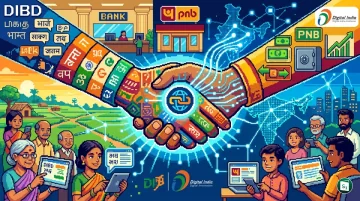
The Digital India BHASHINI Division (DIBD) has signed an MoU with the Punjab National Bank (PNB) to collaborate on advancing multilingual AI solutions.
The partnership aims to enhance inclusive banking and citizen-centric financial services through the 'BHASHINI for Seva/Sanchalan' initiative.
The Department of Administrative Reforms and Public Grievances (DARPG) and the Rajasthan government have organised the 29th National Conference on e-Governance (NCeG) at the Rajasthan International Centre in Jaipur.
The conference was inaugurated by Rajasthan CM Bhajan Lal Sharma under the theme "Viksit Bharat 2047: AI-enabled, Data-driven & Secure Digital Governance."
The National Awards for e-Governance 2026 were presented during the event, recognising excellence with 17 awards across 7 categories. The conference concluded with the adoption of the "Jaipur Declaration on e-Governance 2026," which establishes a roadmap for strengthening AI-enabled, data-driven, and secure digital governance across India.
The Digital Bharat Nidhi (DBN) under the Department of Telecommunications (DoT) has signed an addendum to implement the Amended BharatNet Programme (ABP) in Gujarat. The agreement was signed at Sanchar Bhawan, New Delhi, involving the DBN, the Gujarat government, Gujarat Fibre Grid Network Ltd (GFGNL), and Bharat Sanchar Nigam Ltd (BSNL).
The government has approved ₹5,629 crore for this initiative to upgrade rural telecom infrastructure. The programme aims to cover 14,287 Gram Panchayats and provide on-demand connectivity to 3,895 villages across the state.
The Department of Telecommunications (DoT) has been named the global winner of the World Summit on the Information Society (WSIS) Prizes 2026. The award was conferred under Action Line C6 - Enabling Environment for its flagship project, 'Samriddh Gram: Integrated Phygital Service Delivery Model Enabled by BharatNet'.
The recognition was presented during the WSIS Forum 2026 held in Geneva. The WSIS Prizes, instituted by the International Telecommunication Union (ITU), honour Information and Communication Technology (ICT) projects that advance sustainable development.
The Department of Administrative Reforms and Public Grievances (DARPG) organized the 29th edition of the National Awards for e-Governance (NAeG) 2026 in Jaipur, Rajasthan. The event was held under the theme "Viksit Bharat 2047: AI-Enabled, Data-Driven and Secure Digital Governance".
Union Minister Jitendra Singh conferred 17 awards across 7 categories, comprising 10 Gold, 6 Silver, and 1 Jury award. The NAeG provides a cash prize of ₹10 lakh for Gold award winners and ₹5 lakh for Silver award winners.
Notable Gold award winners include the ICMR-MINDS project for AI-enabled mental and substance use disorder screening, the Panchayat Advancement Index for utilizing data analytics for rural planning, and the Kadepur Gram Panchayat in Maharashtra for implementing a paperless, blockchain-based e-office.
Other recognized initiatives include e-Aarogya Dhamni, e-Jagriti (Ministry of Consumer Affairs), Agri Stack (Ministry of Agriculture & Farmers Welfare), AI Clinical Support in eSanjeevani Telemedicine, the Mahakumbh 2025 Digital Initiative, the District Court Case Management System (DCMS) by the High Court of Kerala, and the Blood Bag Traceability Portal.
The Jury Award was presented to the Survey of India for its project titled "Real-Time Precise Positioning Services through CORS Network".
Union Minister Shivraj Singh Chouhan has launched an AI-enabled Rural Internal Audit portal.
The digital platform aims to enhance financial oversight, audit efficiency, and governance across various programmes under the Ministry of Rural Development (MoRD).
Union Minister Amit Shah has launched the Prime Minister Family Care Tracker (PM-FCT) pilot project in Gandhinagar, Gujarat. The initiative aims to strengthen beneficiary identification and ensure the timely delivery of government welfare schemes.
The PM-FCT serves as an integrated digital platform to monitor the health, nutrition, education, and welfare benefits of children from the prenatal stage up to 18 years of age.
Union Minister Amit Shah has launched the Foreign Contribution (Regulation) Act (FCRA) 2.0 Portal and the electronic Overseas Citizen of India (e-OCI) Card in New Delhi.
The FCRA 2.0 portal transitions the regulatory framework for Non-Governmental Organisations (NGOs) into a fully digital system. Hosted on the MeghRaj Government Cloud, the portal supports 14,500 active FCRA-registered organizations and manages up to 20,000 application cycles annually.
The Pension Fund Regulatory and Development Authority (PFRDA) has launched an AI-enabled grievance redressal platform named 'PFRDA Pension Sahayak' for subscribers of pension schemes regulated by the authority.