
ECONOMY
24 September 2026 ECONOMY
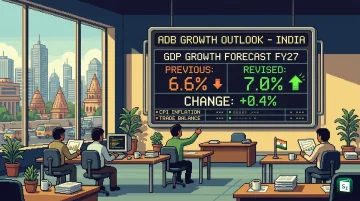
According to a report by the Asian Development Bank (ADB), the GDP growth forecast of India for FY27 is revised to 7% from the earlier estimate of 6.6% in July.
According to a report by the Asian Development Bank (ADB), the GDP growth forecast of India for FY27 is revised to 7% from the earlier estimate of 6.6% in July.
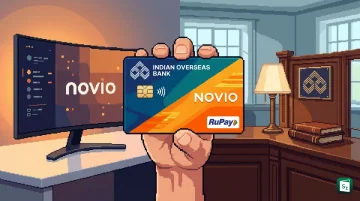
novio, operated by Credilio Financial Technologies Pvt Ltd, has partnered with the Indian Overseas Bank to launch a co-branded RuPay credit card.
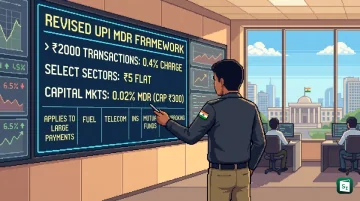
The UPI and Services Committee, led by the National Payments Corporation of India (NPCI), has introduced a revised Merchant Discount Rate (MDR) framework, effective from October 15, 2026. Under the new rules, a 0.4% charge will be applied to UPI transactions above ₹2,000.
A flat MDR of ₹5 per transaction will apply to payments exceeding ₹2,000 in specific sectors like railways, telecommunications, insurance, and fuel. For capital market transactions, including mutual funds and stockbroking, the MDR is set at 0.02% of the transaction value, capped at ₹300.

RNFI Services Ltd, a fintech platform, has secured in-principle authorisation from the RBI to operate as a Payment Aggregator-Physical (PA-P). The authorisation was granted under the Payment and Settlement Systems Act, 2007.
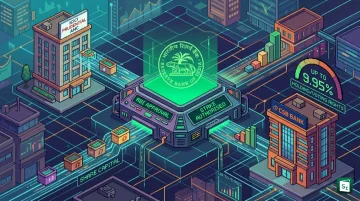
The RBI has approved the acquisition of an aggregate holding of up to 9.95% of the paid-up share capital or voting rights in the CSB Bank by the ICICI Prudential Asset Management Company (AMC).

The RBI has released the June 2026 edition of the biannual “Financial Stability Report” (FSR), which presents an assessment by the Sub-Committee of the Financial Stability and Development Council (FSDC) on risks to the financial system of India.
According to the report, the economy of India grew at 7.7% in FY26. The Monetary Policy Committee (MPC) has revised the inflation projection for the 2026-27 period to 5.1%. The foreign exchange reserves of India were recorded at $672.6 billion as of June 19, 2026.

The RBI has included Coastal Local Area Bank Ltd in the Second Schedule of the RBI Act, 1934. Headquartered in Vijayawada, Andhra Pradesh, it is the first Local Area Bank (LAB) of India.
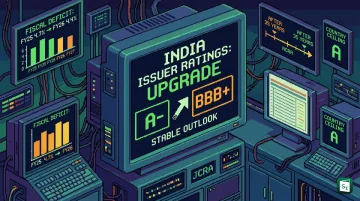
According to a report by the Japan Credit Rating Agency (JCRA), the Foreign Currency and Local Currency Long-term Issuer Ratings of India were upgraded to “A-” from “BBB+” with a stable outlook. This upgrade comes after a gap of 35 years.
JCRA also upgraded the country ceiling for India to “A”. The report projected the fiscal deficit of the Central Government to decrease from 4.7% in FY25 to 4.4% in FY26.

India Post Payments Bank (IPPB) has launched the ‘DakPay Sound Box’ for Merchants, a Digital Insurance Technology Platform, and a Digital Mutual Fund Platform on the occasion of its 9th foundation day to boost financial inclusion.
As of March 2026, IPPB has achieved a customer base of 13.25 crore, with women making up 49% of the total users.
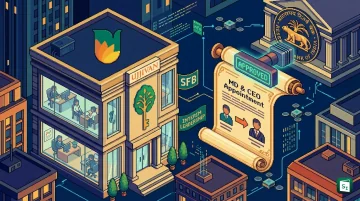
The RBI has approved the appointment of Carol Kripanayana Furtado as the interim MD & CEO of Ujjivan Small Finance Bank (SFB) for 3 months. She succeeds Sanjeev Nautiyal.
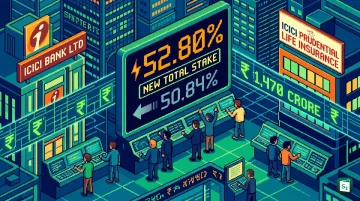
ICICI Bank Ltd has acquired an additional 2% stake in its life insurance subsidiary, ICICI Prudential Life Insurance, for ₹1,470 crore through the stock exchange. With this, the total shareholding of the bank in the insurance venture has increased from 50.84% to 52.8%.
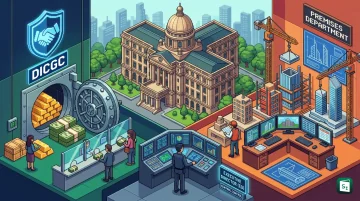
The RBI has appointed Suman Ray as the Executive Director (ED). In his role as the ED, he will oversee the operations of the Deposit Insurance and Credit Guarantee Corporation (DICGC) and the Premises Department.
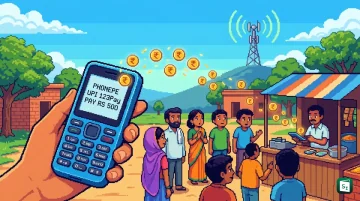
PhonePe has launched ‘UPI 123Pay’, a service enabling feature phone users to conduct UPI transactions without internet connectivity. The service uses a Short Message Service (SMS)-based system to ensure secure transactions even in low network coverage areas.
This initiative aims to promote financial inclusion by providing digital payment capabilities to the non-smartphone user demographic in India.

Kissht, a RBI registered Non-Banking Financial Company (NBFC), has launched a brand campaign titled “Loans Without Any Hiccups” featuring former cricketer Sachin Tendulkar.
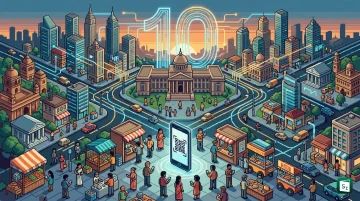
The Unified Payments Interface (UPI), launched by the National Payments Corporation of India (NPCI), has completed 10 years of operations.
In FY26, the share of UPI in the digital payments of India is recorded at 84%, the annual transaction volume of UPI reached 24,162 crore transactions, with the total transaction value estimated at ₹314 lakh crore.

Citigroup Inc. has partnered with Axis Bank to provide financing support to Non-Resident Indians (NRIs) investing in Foreign Currency Non-Resident (FCNR) deposits.
Axis Bank offers FCNR deposit interest rates of up to 6.40%.

Paul Merchants Finance Pvt Ltd (PMFPL), a diversified Non-Banking Financial Company (NBFC) and a part of the Paul Merchants Group, has launched a “Loan Against Silver” product, becoming the first NBFC in India to establish exclusive branches dedicated to silver loans.
The NBFC has initiated its silver loan operations from the Union Territory of Chandigarh.
Under this credit facility, eligible customers can secure loans ranging from ₹2,000 to ₹15 lakh.

The RBI has approved the LIC (Life Insurance Corporation of India) to acquire up to 9.99% of the paid-up share capital or voting rights in HDFC Bank.
It is to be noted that LIC currently holds a 4.11% stake in the bank.
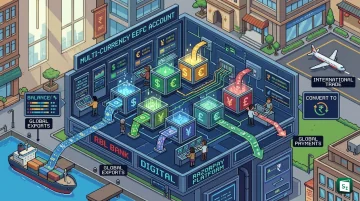
Razorpay, an omnichannel payments platform, has partnered with RBL Bank to launch a Multi-Currency Exchange Earners’ Foreign Currency (EEFC) account.
The account enables exporters and international businesses to retain their earnings in foreign currencies and manage global payments efficiently without immediate conversion into Indian Rupees (INR).

The Directorate General of Foreign Trade (DGFT), functioning under the Ministry of Commerce and Industry (MoCI), has relaxed regulations for rupee-based export transactions to provide Indian exporters with greater flexibility.
Rupee-denominated payments for exports to any country, except Nepal and Bhutan, will qualify for benefits under the Foreign Trade Policy (FTP) and count toward the fulfillment of export obligations. The DGFT also specified that exports financed through the Export-Import Bank of India (EXIM Bank) or Government of India (GoI) lines of credit may be invoiced in INR.
Maha
185.3 P
P Pradeepa
187.3 V
V Vijay
176.8


Reviews collected across various platforms
"The memorising technique in the Scoreclever automatically stores the news in my mind and it saves time."
"It is very helpful platform to study current affairs. It has memory technique which saves lots of time during preparartion."
"Came across Editorial Vocabulary podcast video accidentally and really loved the idea. Its really useful for my preparation."
"Wonderful session. Thank you so much and really hats off to you for making current affairs and editorial an easy one."
"This is one the best app for Current Affairs. The content is cut and short whichever is required and is easy to remember with flashcards."
"Thx to daily quizzes. It played a big role in revisions. April 2024 - April 2025 I missed quizzes 3 or 4 days only. It's that interesting."
"Best app to learn current affairs in an effective way. I usually forgot current affairs easily and now I can easily remember everything."
"I studied current affairs only in Scoreclever and its really a time saver. Thanks Scoreclever team for all your efforts."
"Just wow. Haven't seen anyone explaining editorials like this. Crystal clear explanations with word by word. Thanks so much."
"This app is very useful to the persons who find difficult to go through the bunch of PDFs, and spending lots of time for revision."
"The memorising technique in the Scoreclever automatically stores the news in my mind and it saves time."
"It is very helpful platform to study current affairs. It has memory technique which saves lots of time during preparartion."
"Came across Editorial Vocabulary podcast video accidentally and really loved the idea. Its really useful for my preparation."
"Wonderful session. Thank you so much and really hats off to you for making current affairs and editorial an easy one."
"This is one the best app for Current Affairs. The content is cut and short whichever is required and is easy to remember with flashcards."
"Thx to daily quizzes. It played a big role in revisions. April 2024 - April 2025 I missed quizzes 3 or 4 days only. It's that interesting."
"Best app to learn current affairs in an effective way. I usually forgot current affairs easily and now I can easily remember everything."
"I studied current affairs only in Scoreclever and its really a time saver. Thanks Scoreclever team for all your efforts."
"Just wow. Haven't seen anyone explaining editorials like this. Crystal clear explanations with word by word. Thanks so much."
"This app is very useful to the persons who find difficult to go through the bunch of PDFs, and spending lots of time for revision."
"The memorising technique in the Scoreclever automatically stores the news in my mind and it saves time."
"It is very helpful platform to study current affairs. It has memory technique which saves lots of time during preparartion."
"Came across Editorial Vocabulary podcast video accidentally and really loved the idea. Its really useful for my preparation."
"Wonderful session. Thank you so much and really hats off to you for making current affairs and editorial an easy one."
"This is one the best app for Current Affairs. The content is cut and short whichever is required and is easy to remember with flashcards."
"Thx to daily quizzes. It played a big role in revisions. April 2024 - April 2025 I missed quizzes 3 or 4 days only. It's that interesting."
"Best app to learn current affairs in an effective way. I usually forgot current affairs easily and now I can easily remember everything."
"I studied current affairs only in Scoreclever and its really a time saver. Thanks Scoreclever team for all your efforts."
"Just wow. Haven't seen anyone explaining editorials like this. Crystal clear explanations with word by word. Thanks so much."
"This app is very useful to the persons who find difficult to go through the bunch of PDFs, and spending lots of time for revision."
Complete learning ecosystem to ace CA, English & GA
Revolutionary study technique for Current Affairs, English Vocabulary, and General Awareness. Learn once, remember forever.
Download on Play Store5x smaller, yet better than top sources. Daily Current Affairs and Editorial Vocabulary PDFs on Telegram.
Join on TelegramComprehensive, structured books with clean UI for long-term reading. Regularly updated with current events.
View DetailsIn-depth analysis of daily newspaper editorials with vocabulary breakdown, grammar insights, and key takeaways.
View DetailsCompete daily at 7 PM (Vocab) and 8 PM (Current Affairs). Win exciting rewards based on league rankings.
A dedicated website for Current Affairs preparation, featuring daily updates, and comprehensive resources.
About Us