

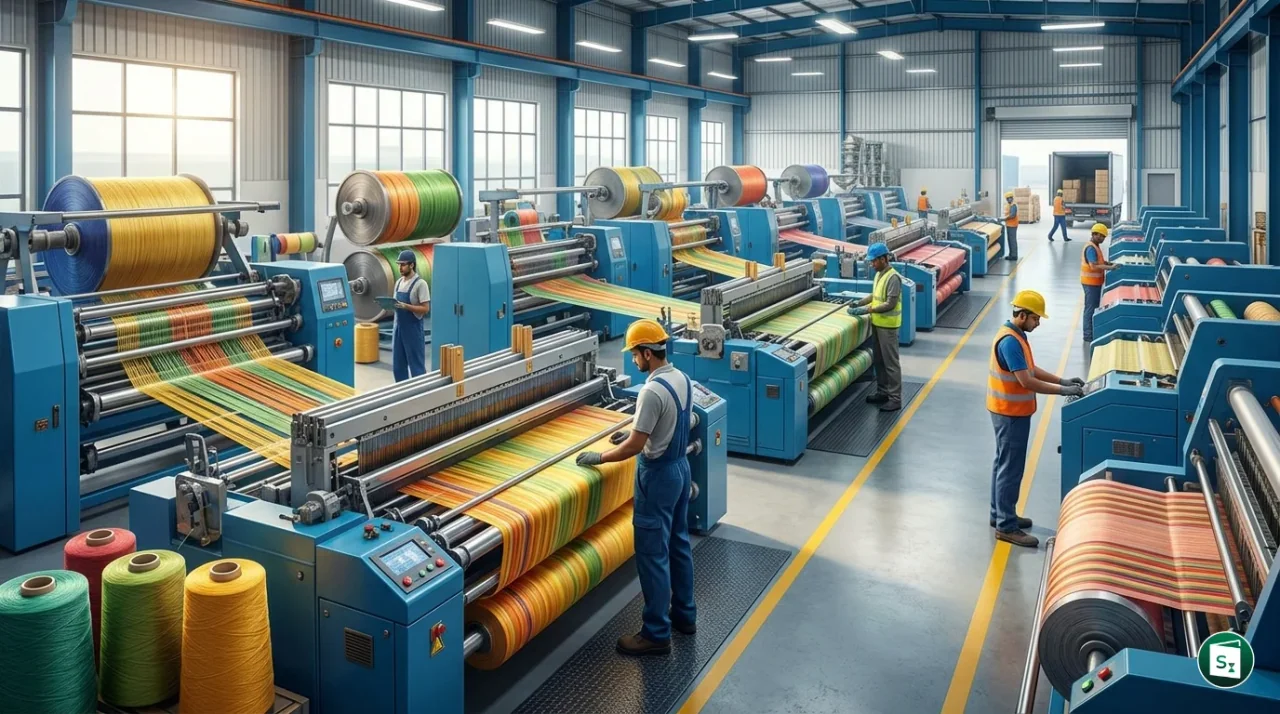
The Government of India has approved 22 new applicants under the third round of the Production Linked Incentive (PLI) Scheme for Textiles on June 12, 2026. These entities are expected to bring an investment of ₹2,339.14 crore and generate a projected turnover exceeding ₹15,000 crore. This move brings the total number of selected companies under the scheme’s third phase to 96, bolstering India’s position in the global textile supply chain.
Expansion of the PLI Scheme for Textiles
The latest round of approvals marks a significant scale-up in the government’s flagship incentive program for the textile industry. With the addition of 22 new entities, the cumulative number of selected companies under the third round of the Production Linked Incentive (PLI) Scheme has reached 96. These companies have collectively committed an investment of ₹12,822.67 crore and are projected to generate a total turnover of ₹58,294.18 crore over the scheme’s duration.
The Ministry of Textiles, which manages the scheme, has focused on creating a robust manufacturing ecosystem for high-value textile products. By incentivizing incremental production, the government aims to help Indian manufacturers achieve global scale and competitiveness, particularly in segments where India has historically had a limited presence compared to global peers.
Strategic Focus: MMF and Technical Textiles
The PLI Scheme for Textiles specifically targets sunrise segments that have high growth potential in global markets. The approved applicants operate across three critical categories: Man-Made Fibre (MMF) Apparel, MMF Fabrics, and Technical Textiles. While India has a traditional dominance in cotton-based textiles, global consumption has shifted significantly toward synthetic and man-made fibers.
Technical textiles represent a specialized niche where materials are engineered for functional performance rather than aesthetics. This category includes medical textiles such as PPE and surgical sutures, agro-textiles like shade nets and mulch mats, and defense textiles including bulletproof vests and fighter aircraft tents. By focusing on these high-tech segments, the scheme aims to reduce India’s import dependency and position the country as a leading exporter of functional textile solutions.
Economic Impact and Cumulative Growth
The PLI Scheme for Textiles is designed to stimulate investment and job creation on a massive scale. As of June 2026, the scheme has already shown tangible progress, with over ₹7,300 crore in actual investment realized by early-stage participants. The latest set of approvals for 22 companies is expected to create approximately 36,000 new jobs, contributing to the larger goal of generating over 7.5 lakh direct jobs across the scheme’s five-year operational period.
| Metric | Latest Approvals (June 2026) | Cumulative (Round 3) |
|---|---|---|
| Number of Companies | 22 | 96 |
| Committed Investment | ₹2,339.14 crore | ₹12,822.67 crore |
| Projected Turnover | ₹15,561.34 crore | ₹58,294.18 crore |
| Projected Employment | 36,217 jobs | 1,23,000+ jobs |
Furthermore, the scheme is promoting balanced regional development, with manufacturing units being established in over 17 states. This geographic spread ensures that the benefits of industrial growth reach beyond traditional textile hubs, fostering a decentralized and resilient manufacturing base for the country.
India’s Vision for a Global Textile Hub
The expansion of the PLI scheme is anchored in the 5F Vision propounded by the Prime Minister: Farm to Fibre to Factory to Fashion to Foreign. This integrated approach seeks to optimize every stage of the textile value chain, from raw material production to final global exports. By strengthening the manufacturing core through the PLI scheme, India aims to reduce its logistics costs and improve its overall ease of doing business in the sector.
The government has set an ambitious target to reach $100 billion in textile exports by 2030. Initiatives like the PLI scheme, complemented by the development of PM MITRA Parks (Mega Integrated Textile Region and Apparel), are the primary vehicles for achieving this goal. Together, these efforts represent a multi-dimensional strategy to transform India into a global textile powerhouse, capable of competing with major players like China and Vietnam in the high-growth MMF and technical textile markets.
Key Takeaways
- The Government of India approved 22 new applicants under the third round of the PLI Scheme for Textiles on June 12, 2026.
- The latest approvals are expected to bring an investment of ₹2,339.14 crore and generate a turnover of ₹15,561.34 crore.
- A total of 96 companies have now been selected under the third round of the scheme, with a cumulative committed investment of ₹12,822.67 crore.
- The scheme specifically targets three high-growth segments: Man-Made Fibre (MMF) Apparel, MMF Fabrics, and Technical Textiles.
- The Ministry of Textiles is the nodal agency for this scheme, which aligns with the Prime Minister’s 5F Vision (Farm to Foreign).
- India aims to achieve $100 billion in textile exports by 2030 through initiatives like PLI and PM MITRA Parks.